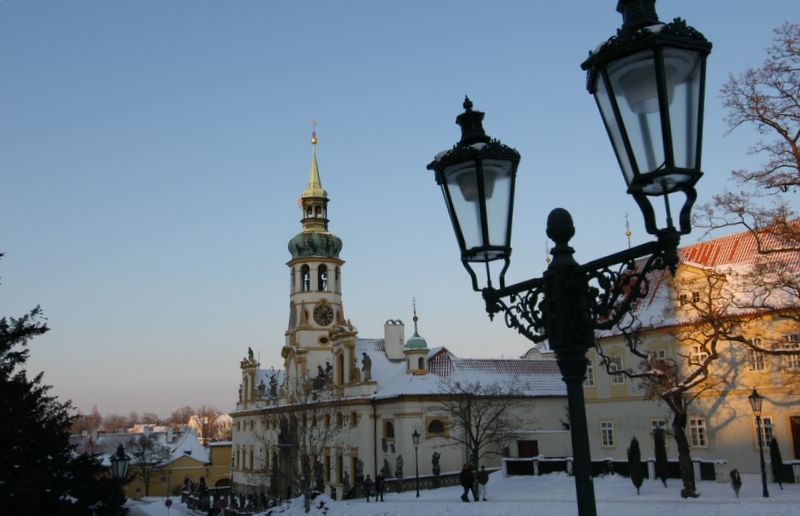
An example of early 18th Cent. Baroque Architecture, this Cappucin monastery was built around a copy of the Loretto pilgrimage shrine in Italy. The pilgrimage site was developed quickly after the Battle of White Mountain, and 100 years later the current design of the building was realized. There were many such shrines throughout Catholic Europe at the time – the Loretto, or Casa Santa, being supposedly the home of Mary and Joseph from Bethlehem, miraculously flown from the Holy Lands by angels to Northern Italy.
Upstairs we have the treasury which includes many gold and jewel-studded processional staff-heads, made from the donated jewels of countesses. The largest and most well-known, called the “Diamond Monstrance” was designed by Joseph von Erlach in 1699 from the wealth of Ludmila Eva Francizka of Kolowrat and contains over 6900 precious stones. It is ironic that the Cappuchins, being a poor and humble order related to the Franciscans, should house such valuable relics.
The Loretto is also known for its bell-tower or “carillon” which holds 27 different bells and is used for training musicians, as well as ringing out on the hour a hymn in praise of Mary. One of many apocryphal stories associated with these bells, all of which of course have names and legends attached to them, is about an old widow who had lost all her children to the flood of the 17th Cent. – she would often visit the Loretto and pay small donations for carols to be played on the bells in memory of her lost children. Finally the day came when the old woman herself passed away, and there, during her funeral, the bells began to peal unaided for the devout woman and her children.

No comments:
Post a Comment